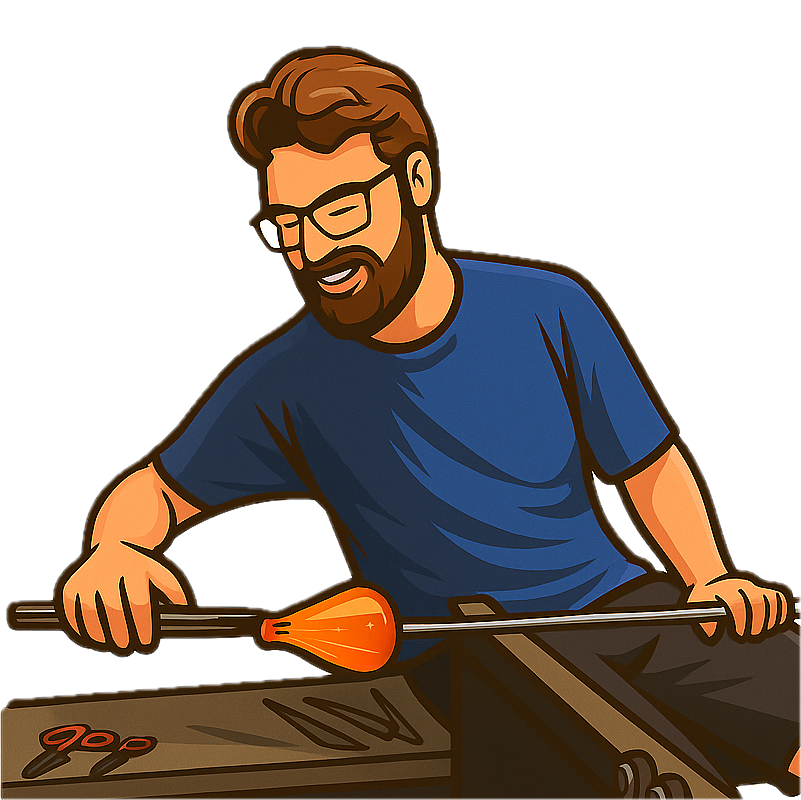
Ethan Ball
I did not grow up thinking I would be a glassblower.
I studied marketing at Ball State University, thinking in terms of business, strategy, and how to get people’s attention. At the same time, I found glass. What started as learning a craft as a hobbie turned into something that stuck. Not because it was easy, but because it was not.
Glass demands your full attention. You cannot hesitate. You cannot overthink. You have to make decisions, commit to them, and deal with whatever happens next.
That part made drew me in.
After school, I made glass my career. I started working on cruise ships as a glassblower. Since then, my work has taken me to over 40 countries, but more importantly, it has put me in front of thousands of people every single week.
Most of them have never seen glass being made before.
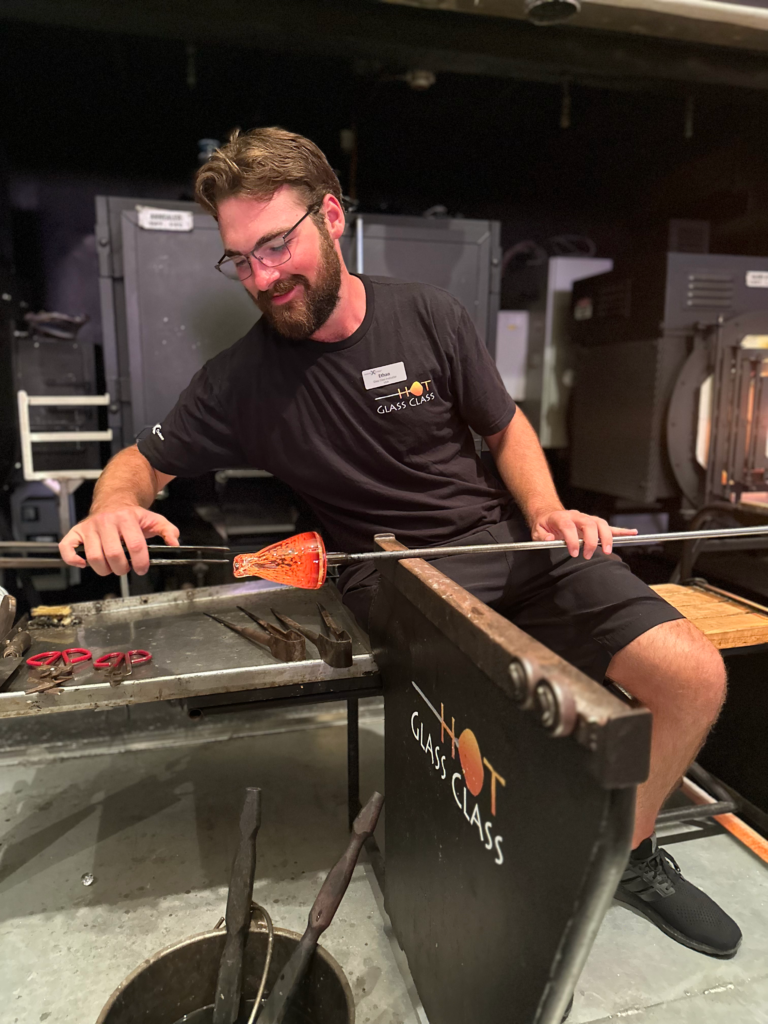
Every cruise starts the same way. New audience, new expectations, new energy. And every time, I walk into the studio, pick up the tools, and try to make something that works. There is no pause. People are watching. The glass is moving. The piece is either going to come together or it is not.
That pressure is part of the draw.
Over time, I realized that the most interesting moments were not when everything went right. They were the moments when something started to fall apart and I had to decide what to do next.
That is where my series, Practicing Failure Bit by Bit, comes from.
It is built around pushing pieces to the edge of control and seeing what happens, all with a live audience. Sometimes they break. Sometimes they collapse. Sometimes they turn into something better than what I planned. The goal is not perfection, it is progress.
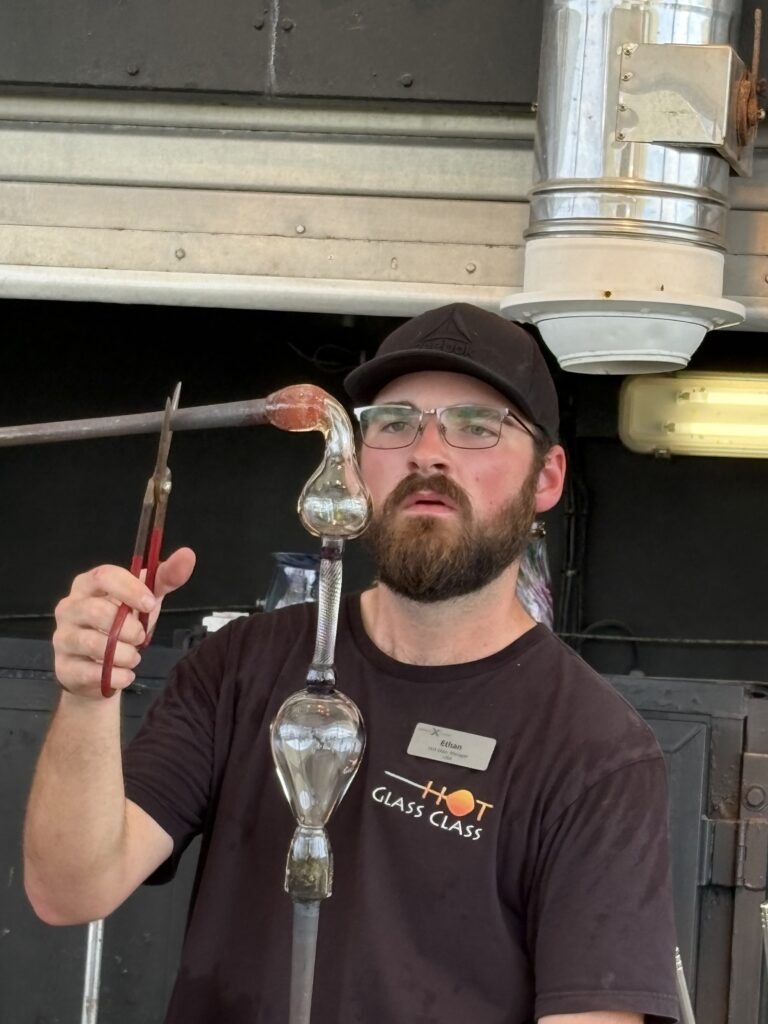
Glass is the perfect material for this because it does not hide anything. Every move is visible. Every mistake carries weight. And every recovery, if you can pull it off, feels earned.
Even though my background is in marketing, I use it every day. Not in a corporate sense, but in how I think about experience. I care about how people encounter the work. How they understand it. How they remember it.
Whether someone is watching a demo, taking a class, or holding a finished piece, that interaction matters just as much as the object itself.
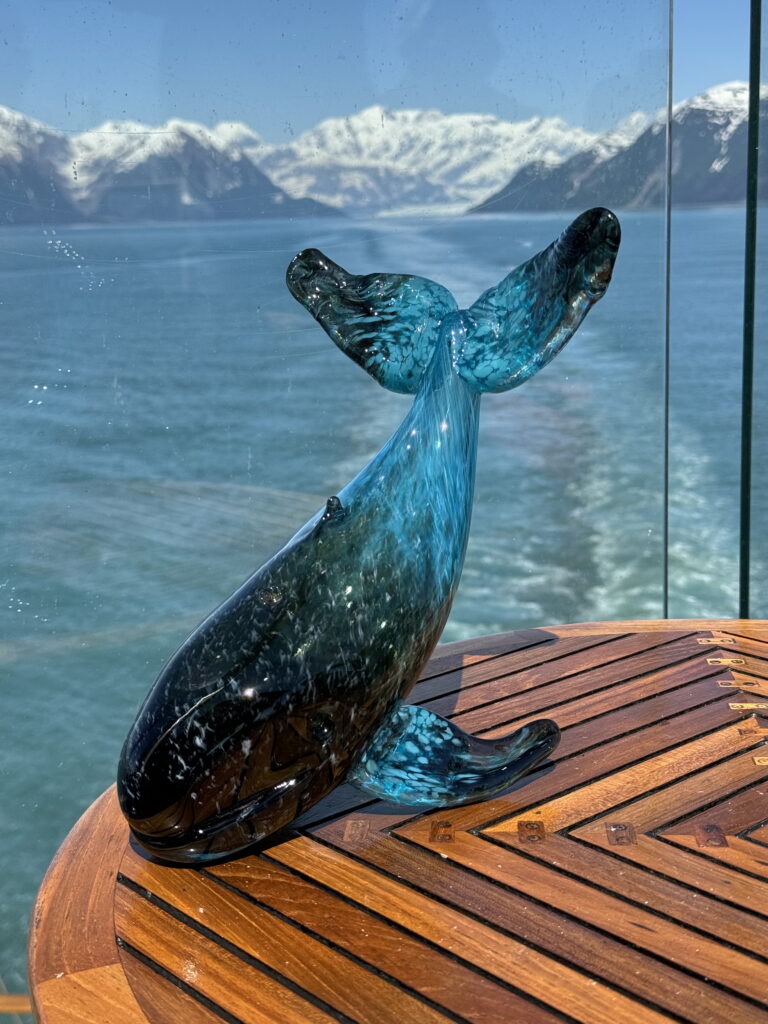
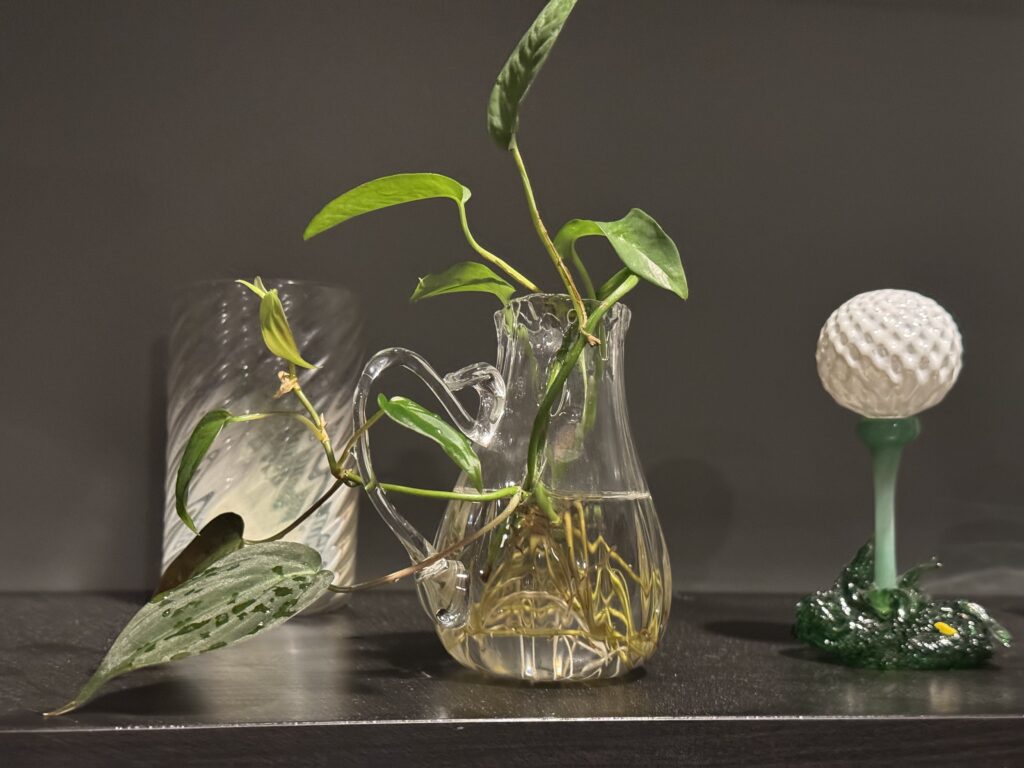
Along the way, I have made work inspired by the places I have been. Pieces like Wallie the Whale, shaped by time spent along the Alaskan coastline, or Botanical Lace, which explores growth through delicate glass structures and living plants.
But more than any single piece, the through line in my work is simple. I am interested in the moment where something could go wrong, and choosing to keep going anyway.
Right now, I am working toward something more permanent. A studio of my own. A space where people can walk in, have a great cup of coffee, and watch glass being made just a few feet away. Somewhere that feels open, creative, and alive.
Until then, I am still chasing that same moment at the bench. The one where it could either come together or fall apart.
That is the part that never gets old.
If you have an idea for a piece or just want to connect, feel free to reach out. I am always open to making something new.